Tahiti
Click to enlarge images - X to return





Discover Tahiti
“We are a free people; and now you have planted in our country the title deeds of our future slavery. You are neither god nor demon; who are you, then, to make slaves? Orou! You understand the language of these men, tell us all, as you have told me, what they have written on this sheet of metal: This country is ours. This country yours? And why? Because you have walked thereon? If a Tahitian landed one day on your shores, and scratched on one of your rocks or on the bark of your trees: This country belongs to the people of Tahiti - what would you think?”
Denis Diderot
French Polynesia is not only about perfect beaches and turquoise lagoons. Beneath its natural beauty lies an ancient mythical universe, where gods, natural forces, spirits, and cultural heroes weave a rich and living tapestry. Exploring Polynesian mythology means discovering the spiritual soul of the islands — a sacred network that connects the land, the sea, the sky, and the people.
According to ancient Tahitian beliefs, the universe began inside a closed shell called Rumia, where the creator god Ta’aroa dwelled in eternal solitude. One day, Ta’aroa broke the shell and began the act of creation:
• From his spine, he formed the mountains
• From his skin, the solid ground
• From his tears, the oceans
• With his voice, he summoned other gods
Thus the islands were born, along with humans and the laws of the cosmos. Ta’aroa did not only create the world, he gave it spiritual meaning.
In the Polynesian universe, everything — every stone, wave, tree, and person — possesses mana, an invisible sacred energy. Mana can be strong or weak, positive or destructive, depending on how it is used or respected. Those with great mana — chiefs, priests, warriors, artists — are held in high esteem. But places can also hold mana: a volcanic peak, a marae, or a tiki statue. The world’s balance depends on keeping mana in harmony.
Tahiti is the cultural center of French Polynesia. The Pearl of Polynesia. Flying into Papeete was like coming home to Hawaii. Having raised the kids in Hawaii, we didn’t rush back to visit the South Pacific / Oceania region during our 25-year adventure. Stepping off the plane, we were glad we came. We immediately felt at home here.
That feeling made even more sense as we learned more. Tahitians were a major source of the settlement and cultural development of Hawaii. While the earliest settlers to Hawaii are believed to have arrived from the Marquesas Islands around 400–700 AD, a second highly influential wave came from Tahiti and the surrounding Society Islands between the 11th and 14th centuries. They brought new religious practices, social structures, and voyaging technology. In Hawaiian oral traditions, Tahitian voyagers such as the high priest Paʻao are credited with introducing the kapu system, human sacrifice, and new types of heiau (temples).
We stayed on a beach far from the hustle and bustle of the capital. Swimming daily, eating fruit off the trees, hanging at the market with the locals. Many locals had intricate tattoos. In Polynesia, sacred knowledge wasn’t written — it was inked into the skin. The tatau is a mythical language: every line represents a connection to a god, an ancestor, or a force of nature. In modern times, many designs still carry spiritual and cultural meaning, not just decoration.
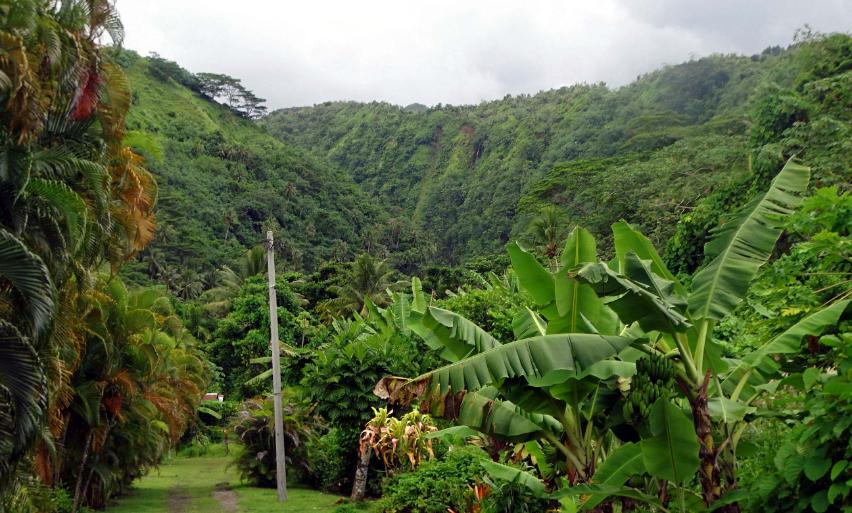
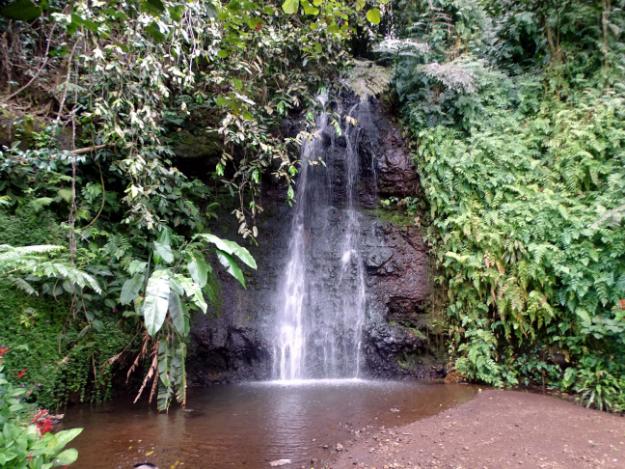
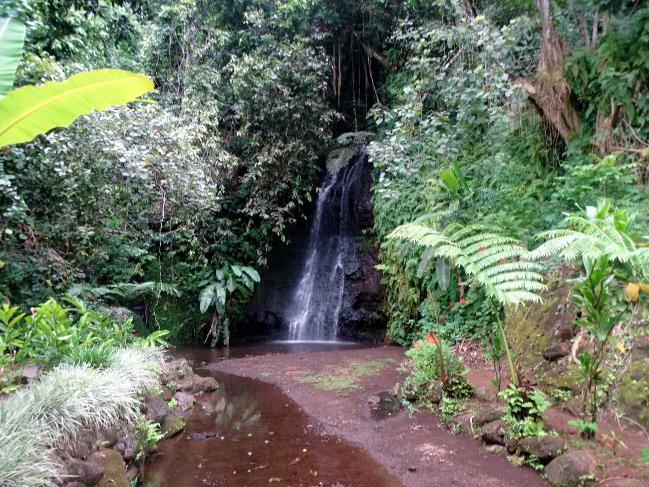
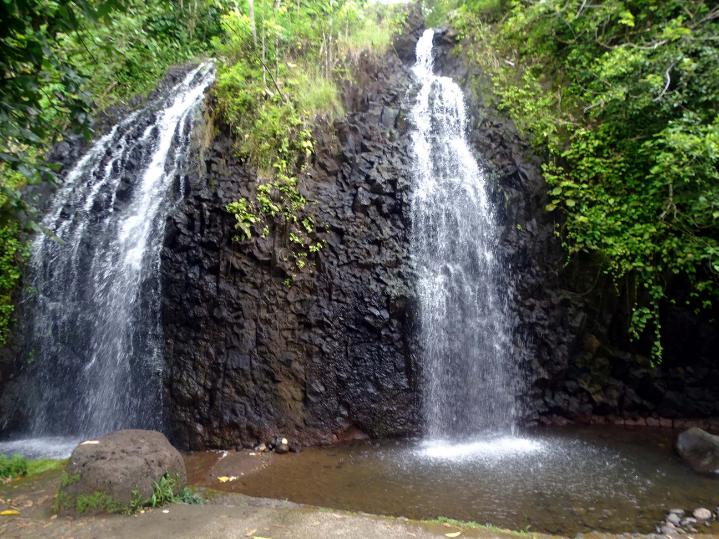
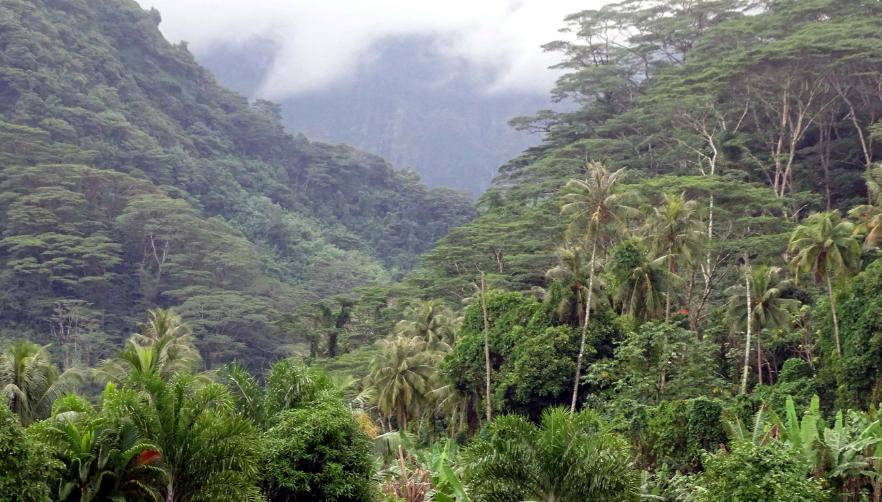
Island life is island life. Slow and easy. We rented a car with a new friend from the next bungalow and circled the island for a full day. Waterfalls, volcanoes, green jungles, beaches, small cafés along the shoreline, and lush Papenoʻo Valley were the highlights.
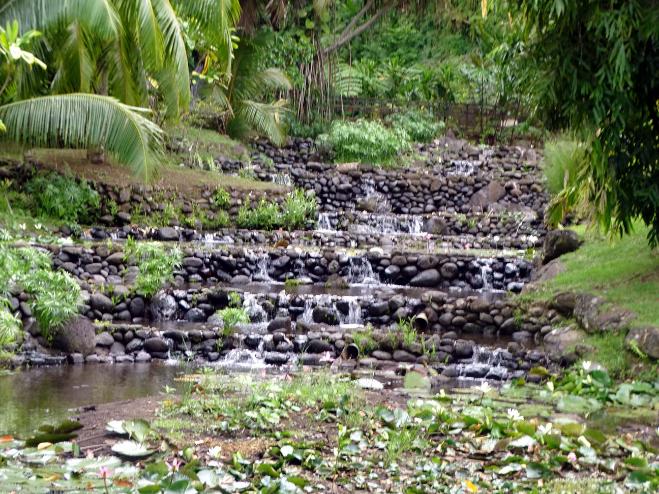
One of the places that really stayed with us was Marae Taʻata, one of Tahiti’s largest traditional temple complexes, featuring three connected marae with distinct stonework. Set amid lush coastal scenery, it offers a powerful glimpse into Polynesian ceremonial life and architecture. It was easy to stand there and imagine how the Tahitian ancestors lived, worshipped, and connected with the unseen world around them.
It is estimated that Tahiti was settled by Polynesians around 500 BC and developed a rich hierarchical society. Europeans sailed here in 1767, and the island was colonized by France in the 19th century. As usual, the French did little to actually improve the island, but immediately one notices how the French influence remains.
The prices for food are outrageous. With fresh fruit dropping off the trees, the locals have instead adopted white bread baguettes as a staple. This has caused a surge of diabetes in the local population. That, plus dusty tins of canned escargot, snails, and expensive imported wines, reminds you that Tahiti remains an autonomous overseas country of France.
If you lived in a cold climate and wanted a tropical island to laze on, just take it. Colonization was a trend that powerful politicians got away with for centuries. The biggest stick ruled. Mankind should have outgrown this by now — but have we?
Love, Light & Laughter,
xo Nancy & Joseph
TRAVEL NOTES:
“Hello” in Tahitian is ‘Ia ora na’
Manomano Lodge
Address | BP 120 093, pointe Manomano, route du marae Mahaiatea PK39,2 coté mer |
Phone | +689 87 76 60 03 |
Helpful Alex and his family run a quiet beachfront camp–type hostal. Two sea view cabins, with set back garden view apartments. The bedroom of these apartments are up steep stairs but you can stay downstairs. Renovated bathroom and kitchen. The taxi to this property cost us $ 80 USD – terribly expensive. We tried to take the bus back to Papeete, but the bus drove right by us. We had to hitchhike to catch our ferry to Moorea. Rental car is recommended or for a couple days stay closer to ferry or airport.
Enjoy more of Tahiti!
Click to enlarge images - X to return