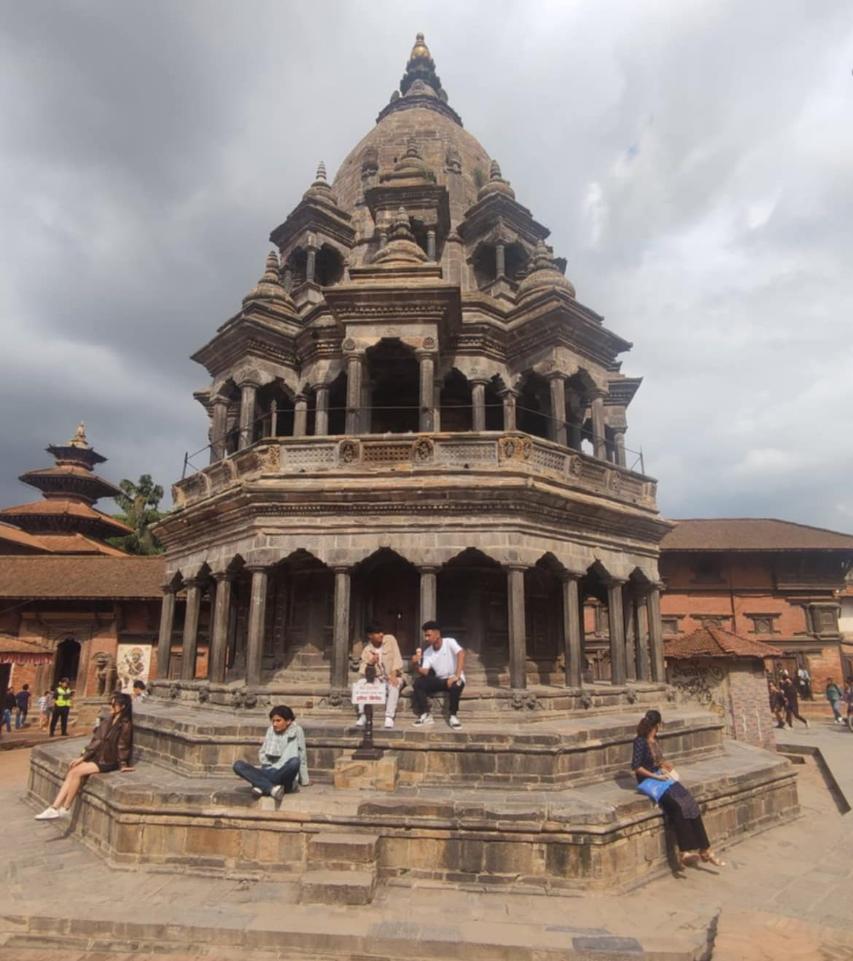
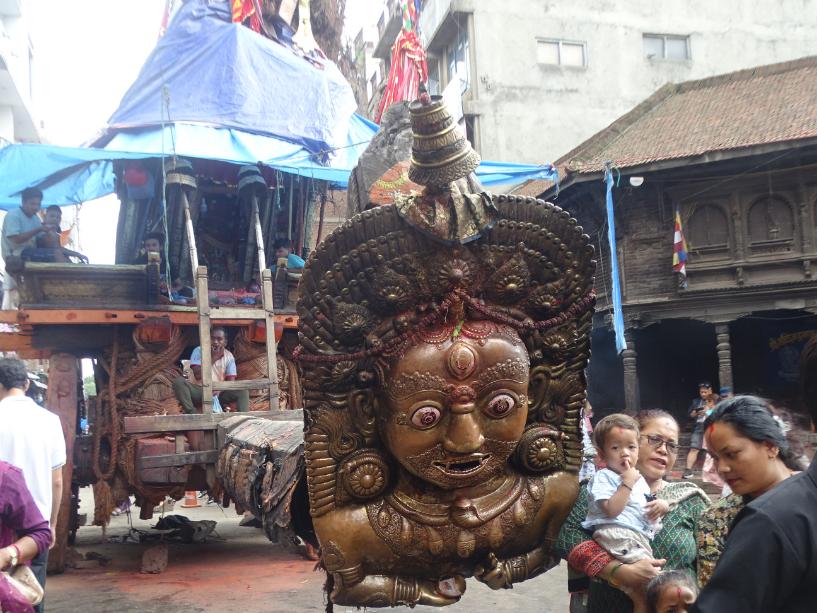
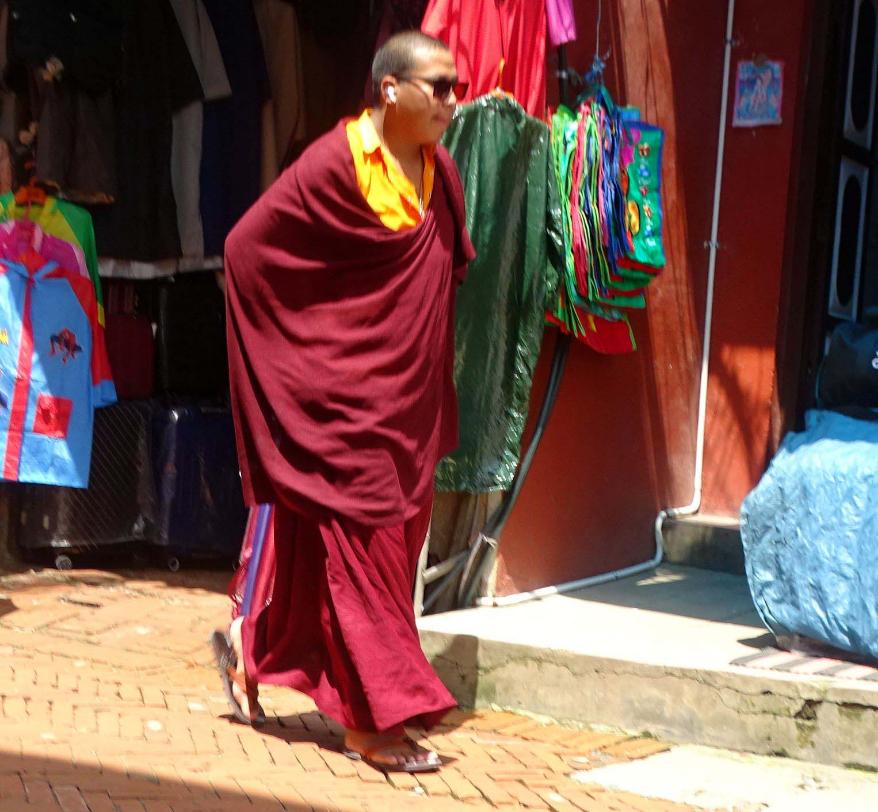
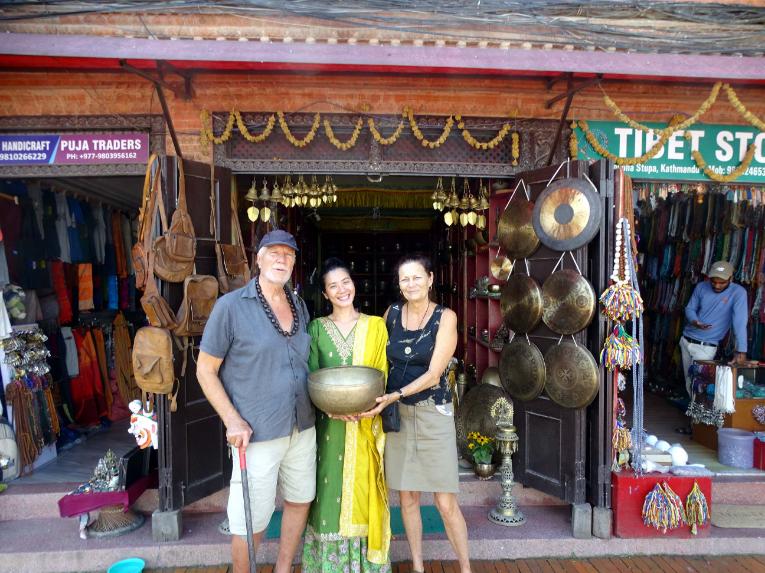
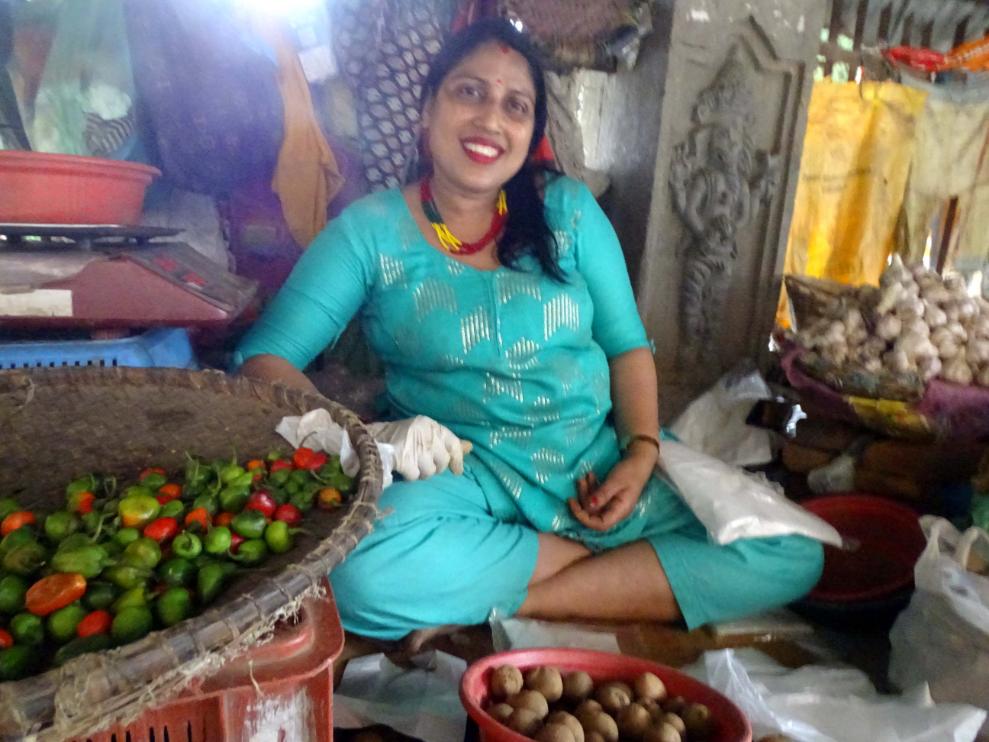
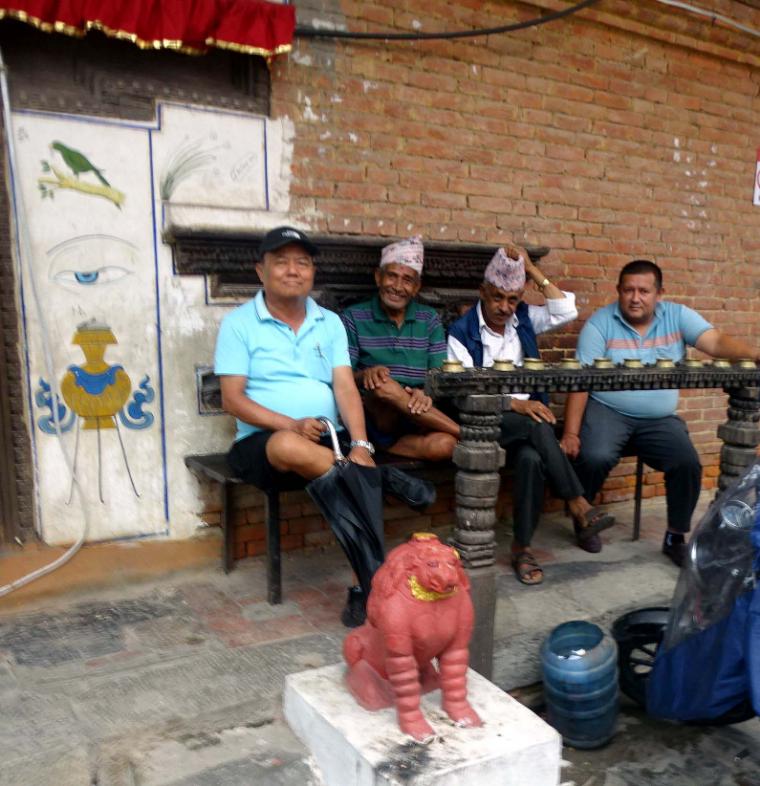
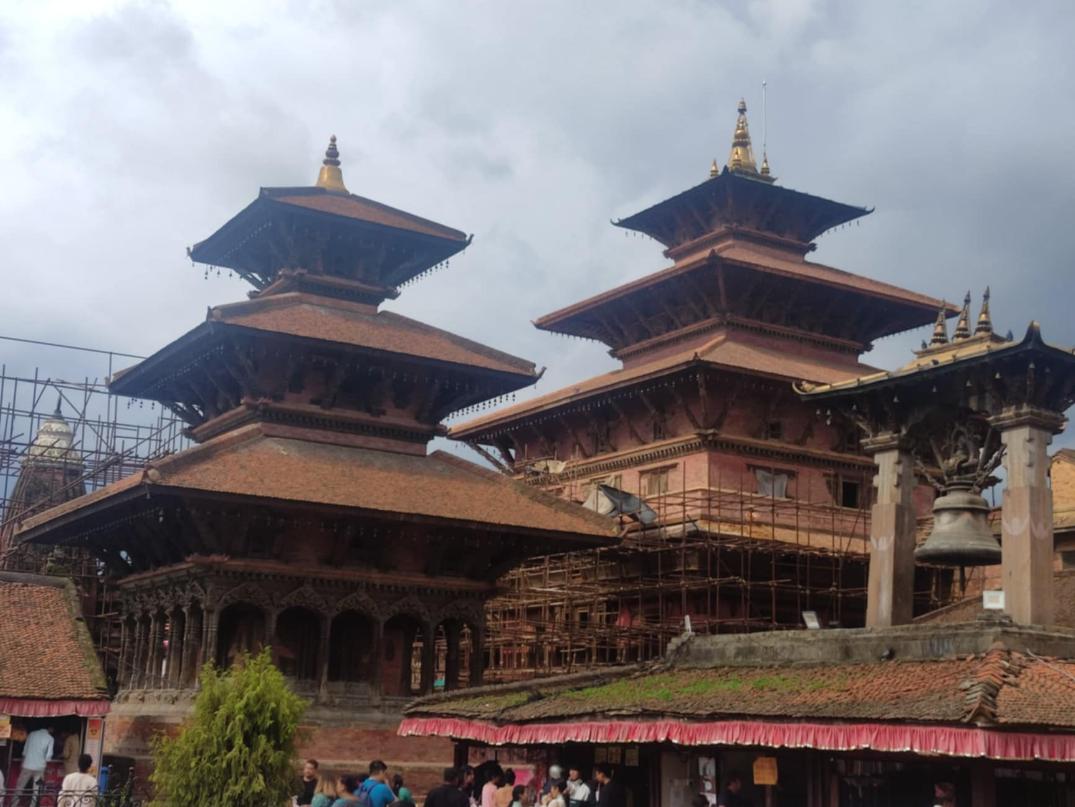
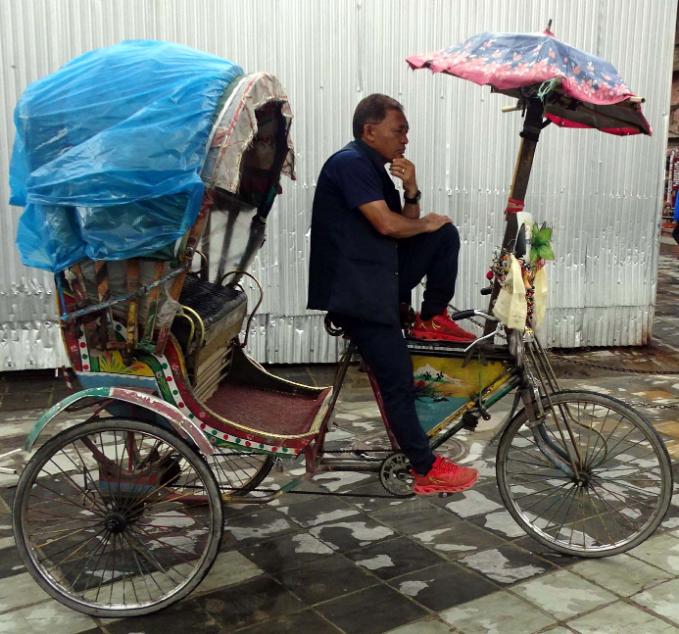
The City of Temples. Kathmandu Valley has so many shrines, temples, and stupas that it is often called the “City of Temples.” This beautiful valley was once a large, deep, pristine lake. According to local legend, the bodhisattva Manjushri drained the water so the valley could be settled. Today, the city is flanked by four majestic mountains: Shivapuri, Phulchoki, Nagarjun, and Chandragiri.
Sitting at a pleasant 1,400 meters (4,600 feet), the city was named Kathmandu in the 16th century after the Kasthamandap Temple in Durbar Square, a structure reputedly built from the wood of a single tree. Formerly known as Kantipur, it was founded in 723 CE and is famous for its ancient, intricate Newari architecture, its blend of Hinduism and Buddhism, and its role as the gateway to the Himalayas. The indigenous inhabitants are the Newar community, who are known for their rich cultural heritage and skilled craftsmanship.
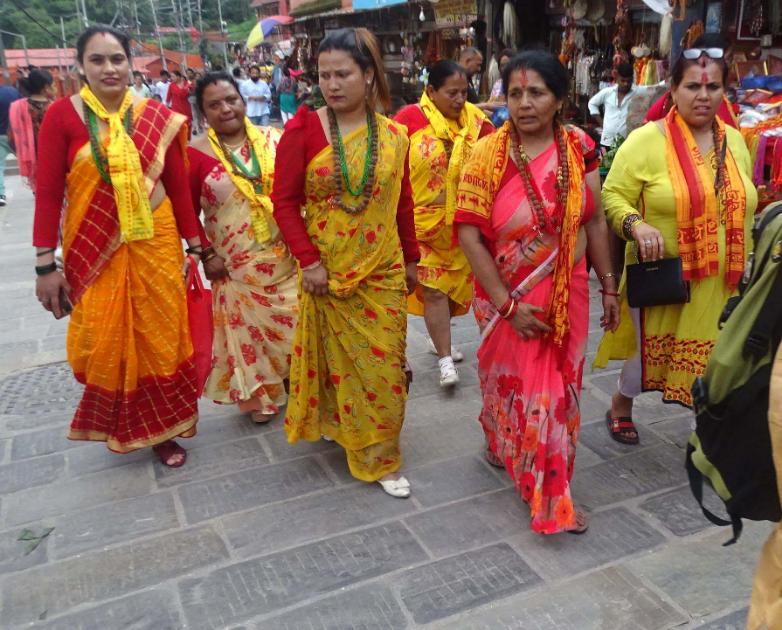
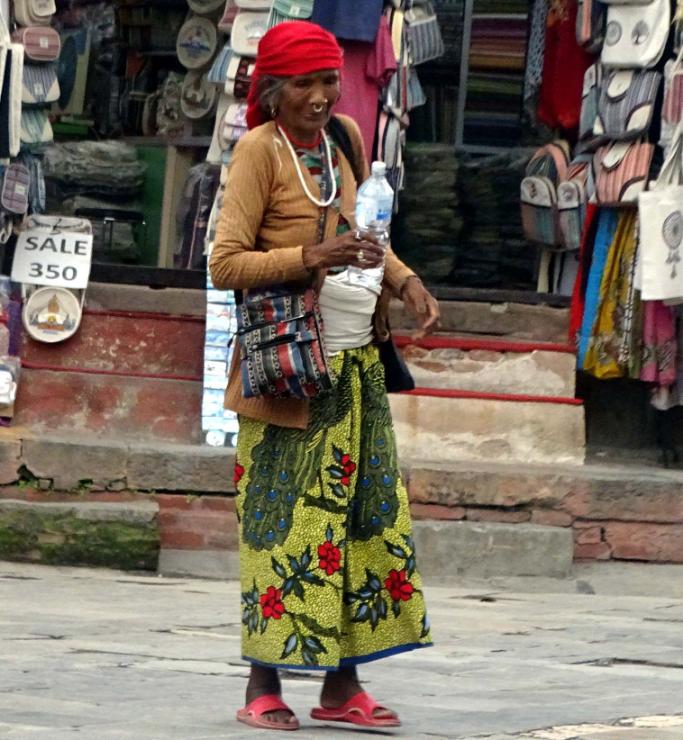
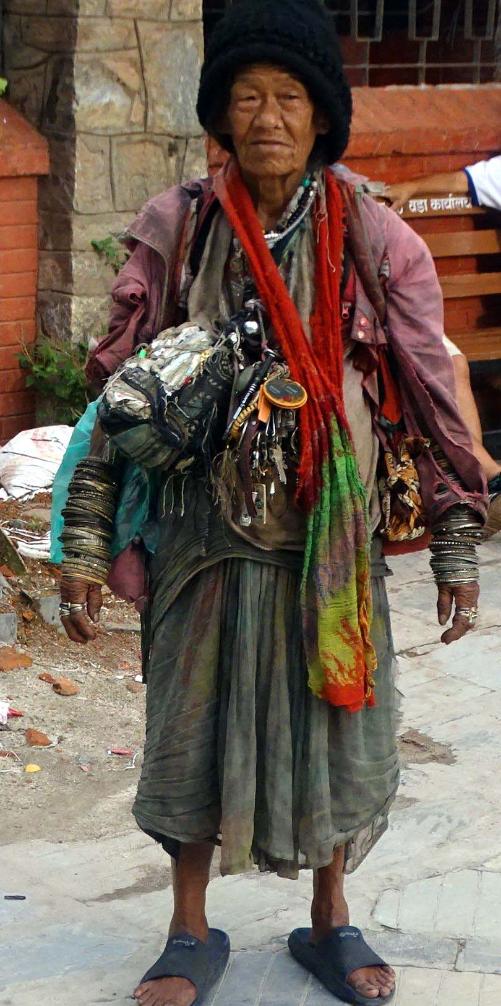
Historically, this valley was known as the Nepal Mandala, acting as a crucial trading hub on the ancient route between Tibet and India. Because of its isolated location in the mountains, Kathmandu developed a unique culture and architecture that remained largely untouched by foreign invasions for most of its history. The first short-lived “invasion” came not from armies, but from travelers. During the 1960s and 1970s, Jhochhen Tole in Kathmandu was famously known as “Freak Street” because it became the ultimate destination for hippie travelers on the Hippie Trail. Gone are the hippies, replaced now by the occasional yuppie, Gen X-er, millennial, Zoomer, or maybe even a twinkle-in-Dad’s-eye Beta. Whoever, whatever — Kathmandu remains a continually busy cacophony of Buddhist and Hindu ceremonies, with a few tourists thrown in. It is one of those exotic places on earth where you just never know what you will see when you come around a corner!
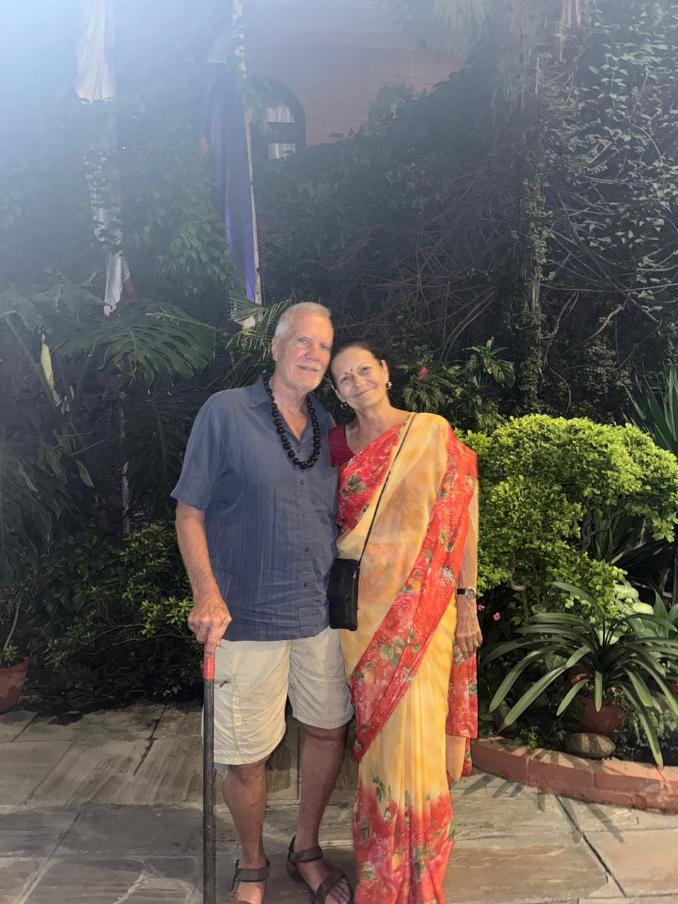
All it took was seeing a sale promo: $138 to Kathmandu from Bali. Before we knew it, we were winging our way to one of our favorite destinations. Even after six visits, we are still enthralled by the possibilities of exploring yet another small alley, different temple, or surrounding village. Staying in Thamel, at the Nirvana Hotel, we immersed ourselves once again in this lively culture.
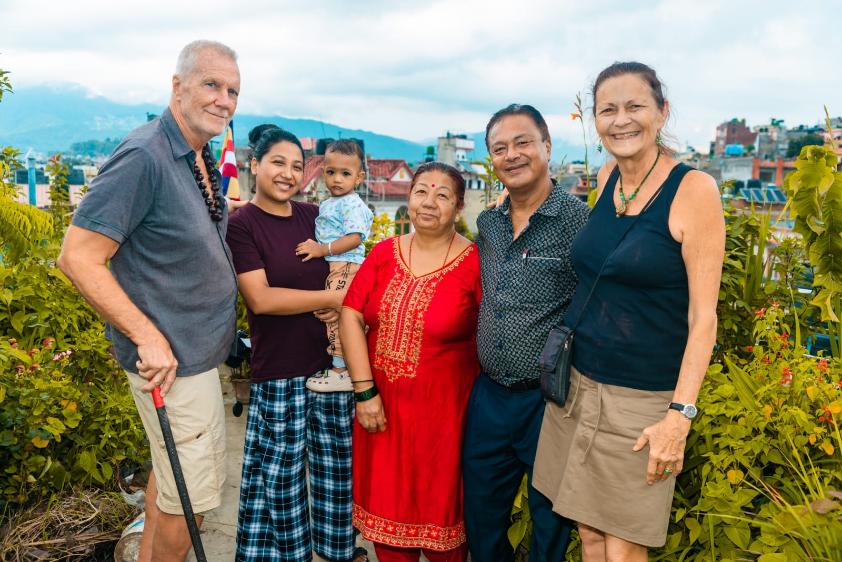
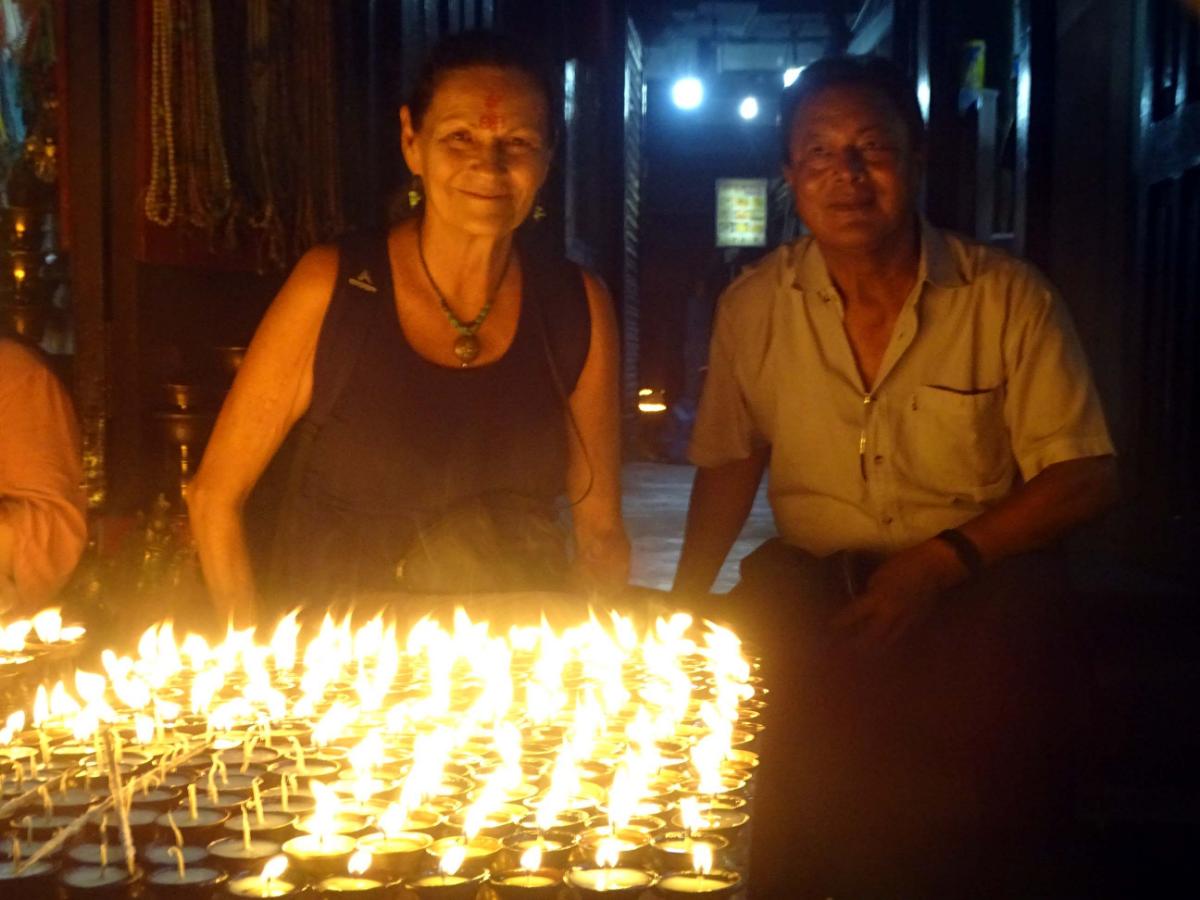
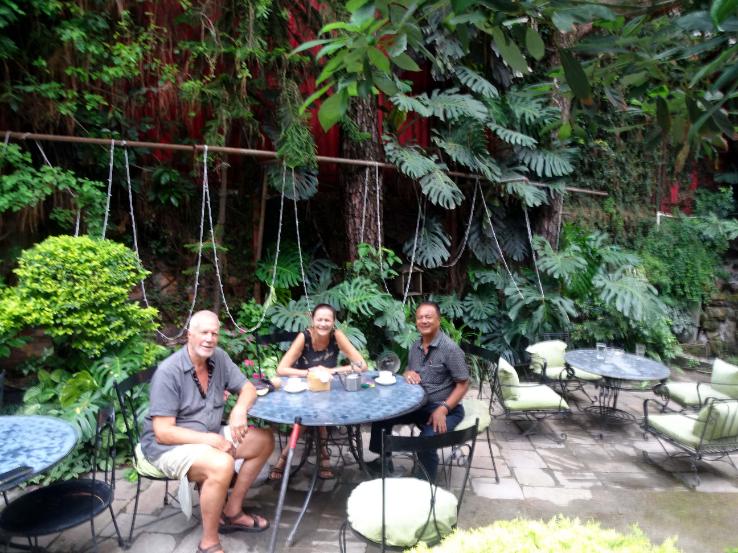
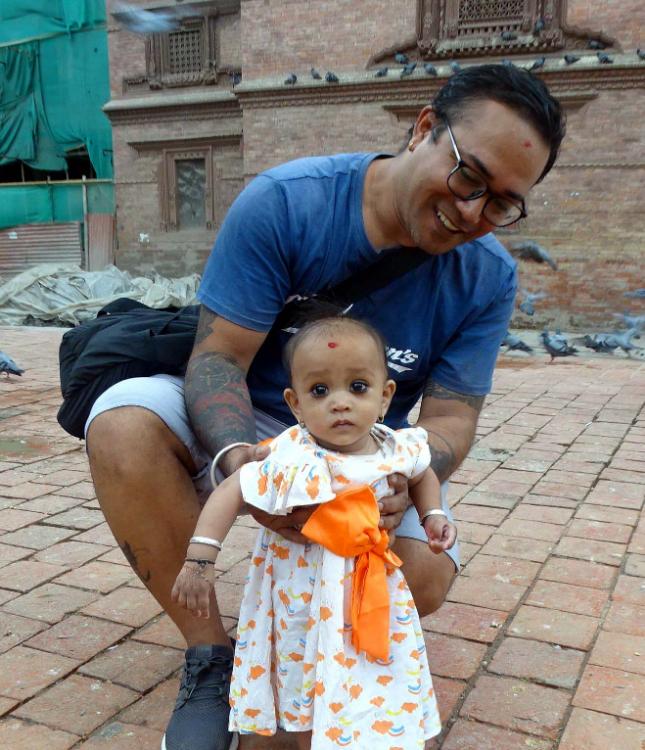
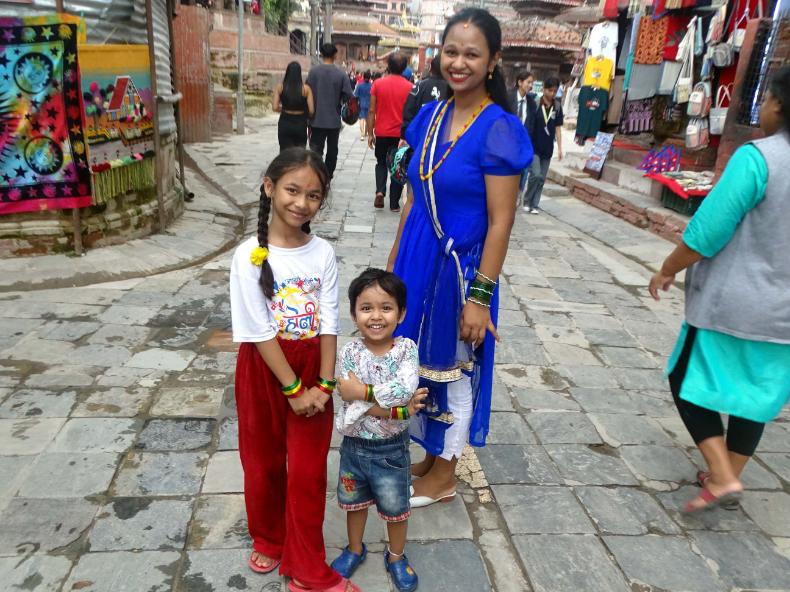
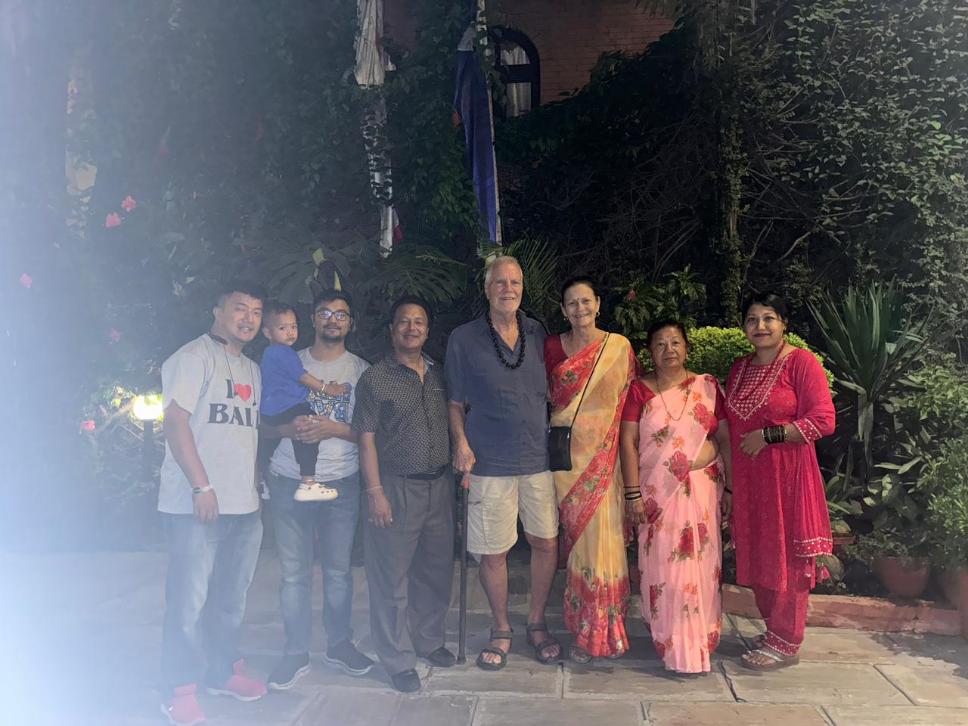
Our main reason for visiting is always to spend time with our dear, dear friends Ram, Gundikesari, and family. I have known Ram for over 40 years. He came to Canada to study with the help of dear Swiss friends Elizabeth and Pierre. We first came to Kathmandu in 1995 when we taught English at Children’s Model School, staying at their apartment and immersing ourselves in this rich culture. Since then, we have returned on the way to backpacking to Everest Base Camp, while trekking, and after traveling through Kashmir twice. We watched two little boys, Roshan and Sri Krisna, grow up, and now they are successful, married, and have children of their own. Time sure does fly in the Himalyas!
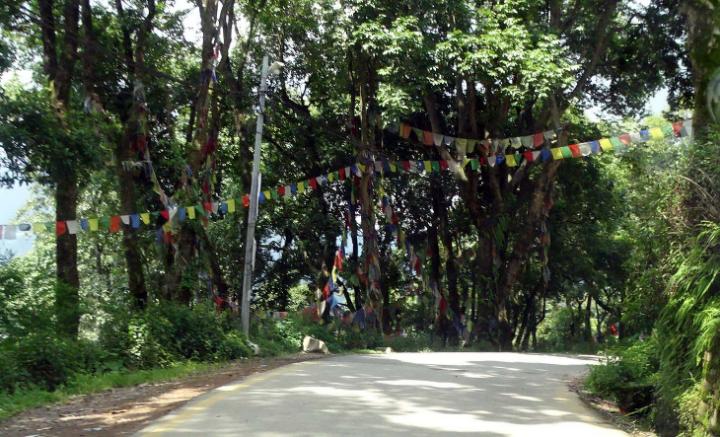
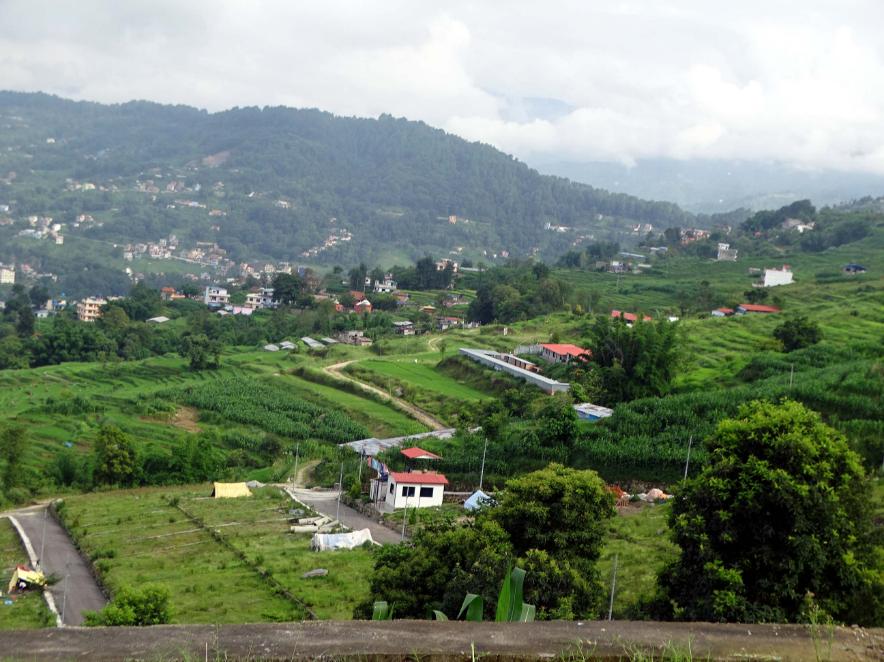
We always try to get a closer look at the Snow Mountains — Everest, Machapuchare, and the rest. This time we took an exciting trip up to Nagarkot, high on the far side of the valley. The “Big Boys” eluded us this trip, but we did catch a few glimpses between the clouds. During the hot, rainy summer weather, the Himalayas often hide behind the clouds, but in fall and winter they stand tall like centurions — an awesome sight. We also enjoyed a lovely dinner at Ram and Gundikesari’s home, and later took them out for a meal in Thamel. Ram, the best “guide” in Kathmandu, joined us for trips to Pashupatinath Temple and Boudhanath Stupa. Pashupatinath Temple is a revered, UNESCO World Heritage site dedicated to Lord Shiva, located on the banks of the Bagmati River. Known for its pagoda architecture, it is a significant pilgrimage site featuring daily cremation ceremonies
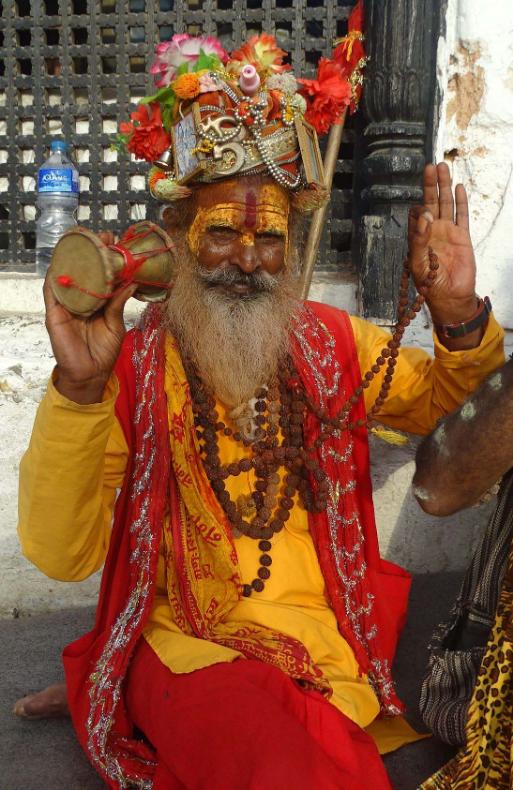
We joined Ram during one such lively ceremony at Pashupatinath Temple. The burning ghats of Kathmandu were crawling with thousands of devotees and a fair share of sadhus — our favorite guys! Offerings to the gods, under a full moon, with at least a dozen funeral pyres blazing along the river, made for a sight to remember. Like clockwork, they brought in the bodies on stretchers, surrounded by crying family members. Each person was washed in the river, then covered in silk and prepared for cremation. Tinder was placed in strategic spots and the flame was ignited amid prayers and sometimes wailing family members. Souls gone, only the cocoons remaining; and these cocoons or bodies burned until only ashes remained. Ashes collected. Gong. Another life finished. Bring in the next. This continued for hours, and at one point it looked and smelled like a Texas BBQ. The cycle of life!
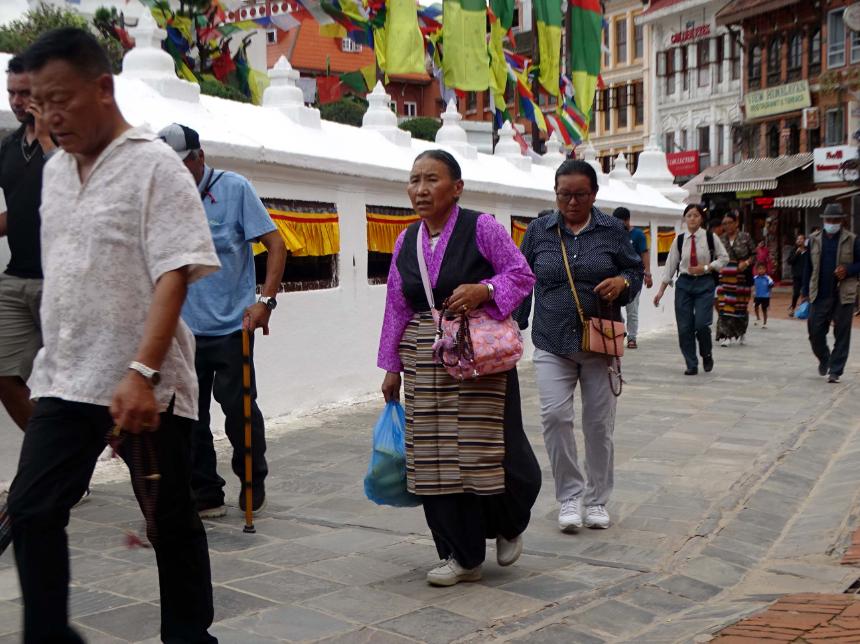
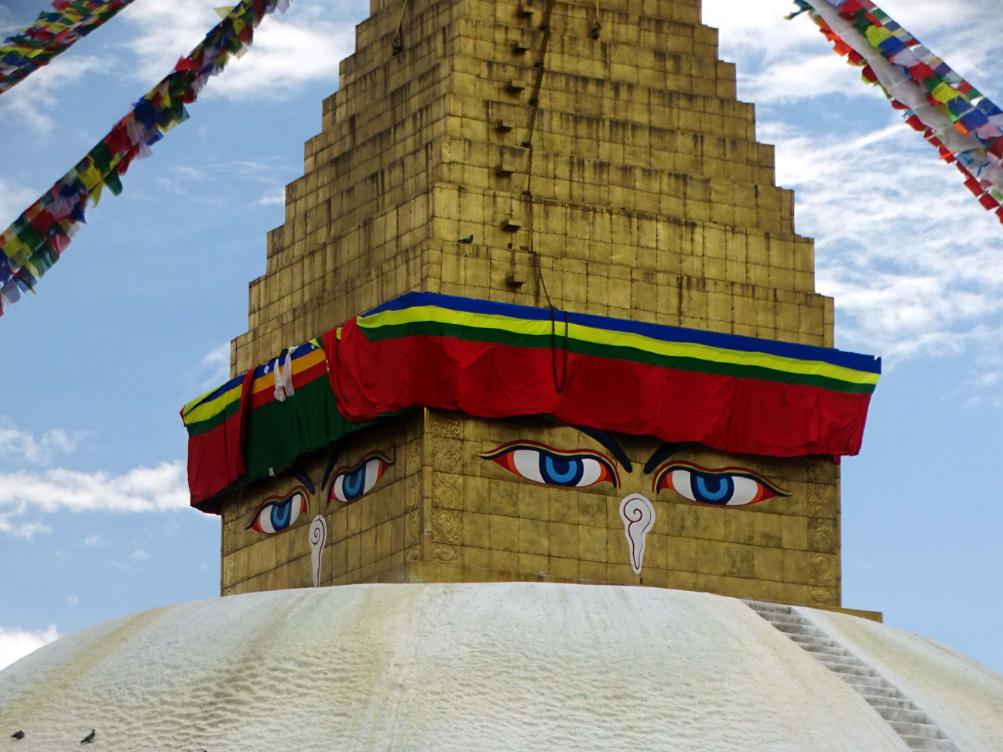
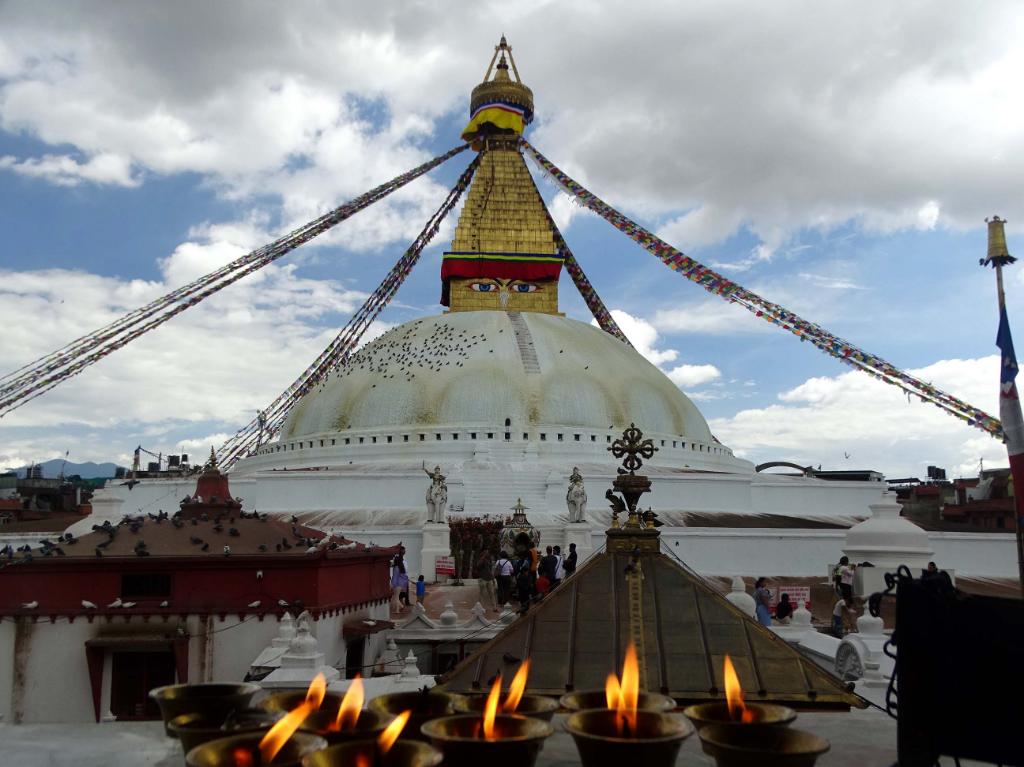
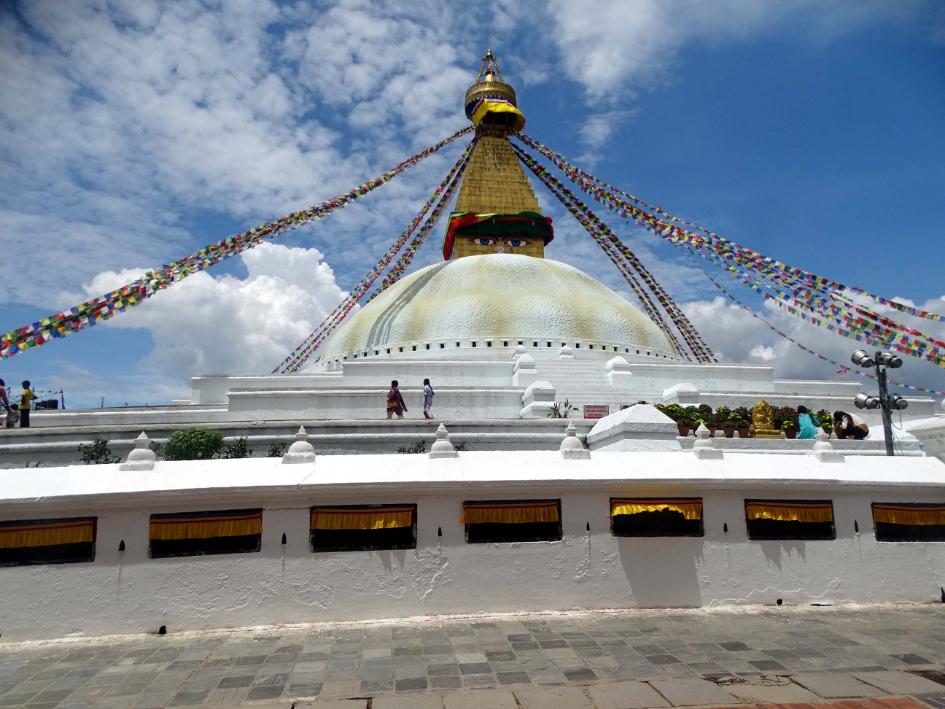
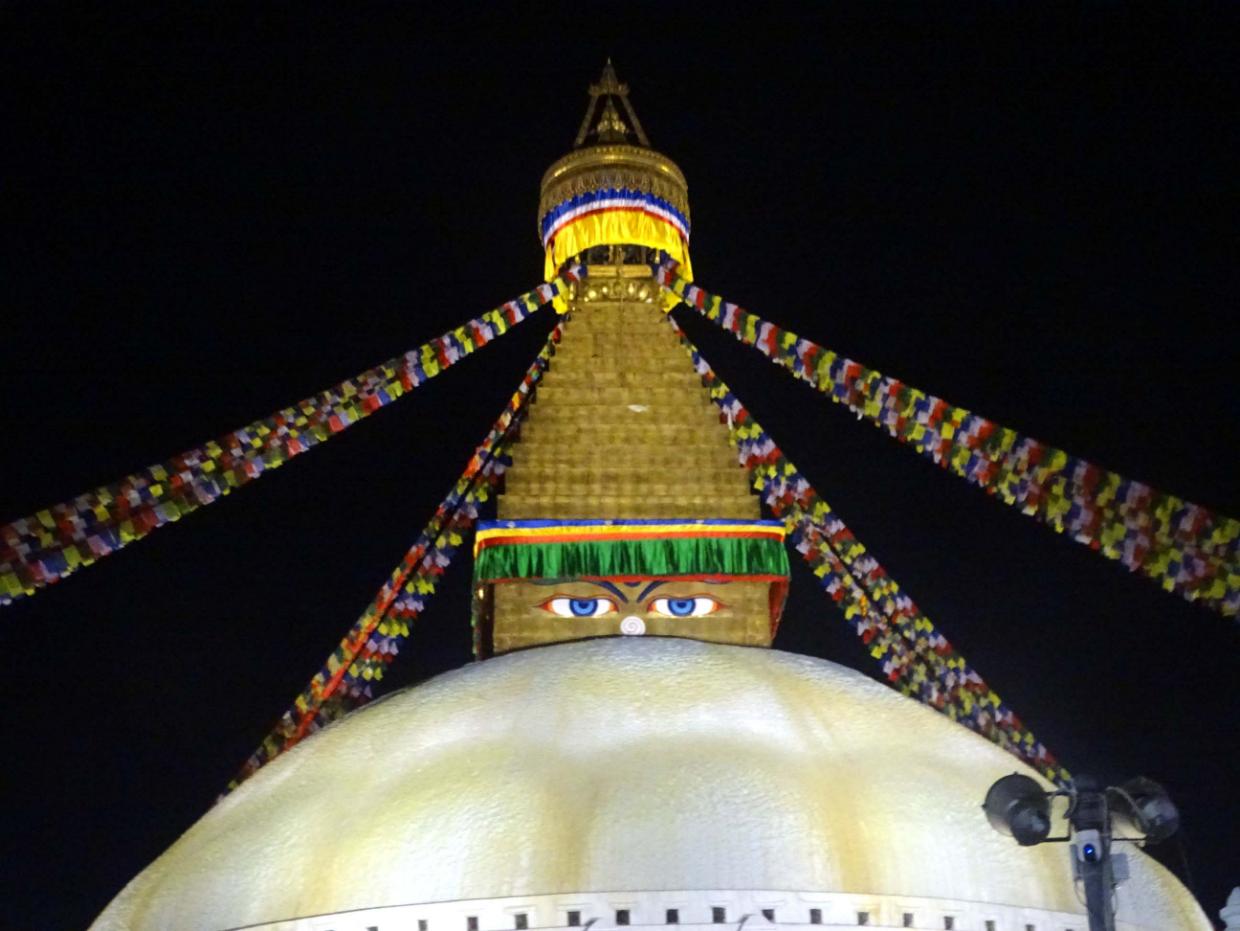
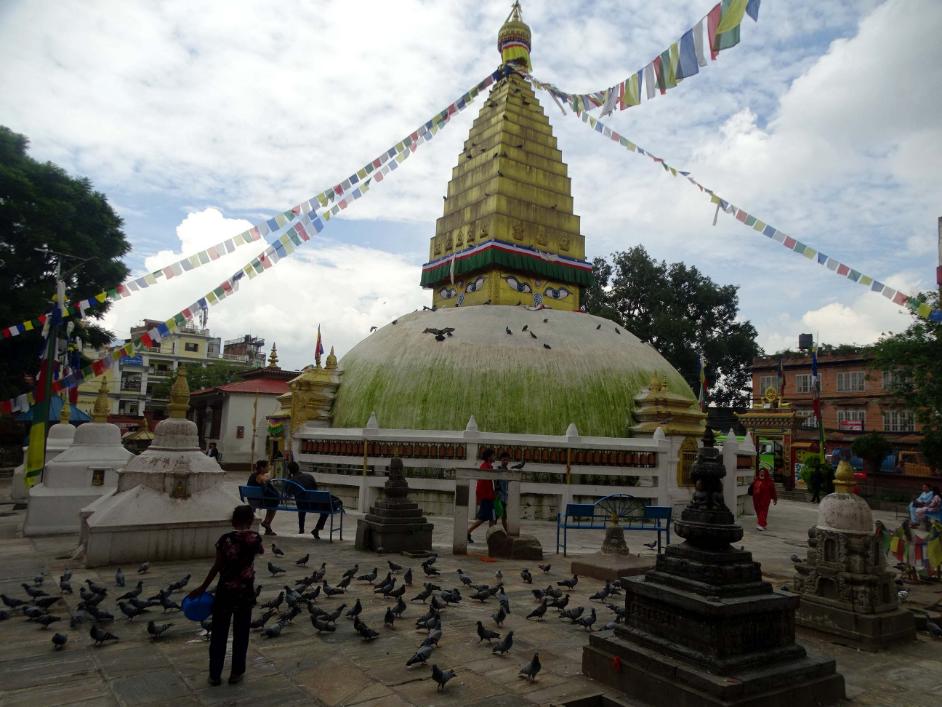
When in Kathmandu, I always have to make a trip to Boudhanath Stupa to circumambulate the stupa with the pilgrims and to sit in silence near “my Buddha.” A popular Tibetan myth tells of a poor poultry woman named Jadzima (or Ma Jhyazima) who asked the King of Nepal for land as large as a buffalo skin to build a shrine. She cleverly cut the hide into thin strips to encircle a large area. After her death, her four sons completed the project. Another legend tells of a king who unwittingly killed his father to end a drought. As penance, he built the stupa, known as Khāsti Chaitya. It is said that because of the drought, workers used morning dew to mix the mortar, leading to its original name, meaning “Great Stupa of the Dewdrops.”
For centuries, Boudhanath served as a vital rest stop and place of prayer for Tibetan merchants traveling on the ancient trade route between Lhasa and Kathmandu. Following the Tibetan uprising and the influx of refugees into Nepal, the area around the stupa transformed into a major hub of Tibetan culture. Today, more than 50 monasteries, or gompas, surround the site.
The devastating 2015 Gorkha earthquake severely damaged the stupa, causing the gold spire to crack and the upper structure to be removed for safety. It was the first major heritage site in the Kathmandu Valley to be fully restored after the quake. The reconstruction, costing roughly $2.1 million and using over 30 kg of gold, was funded entirely by private donations from Buddhist groups and reopened in November 2016.
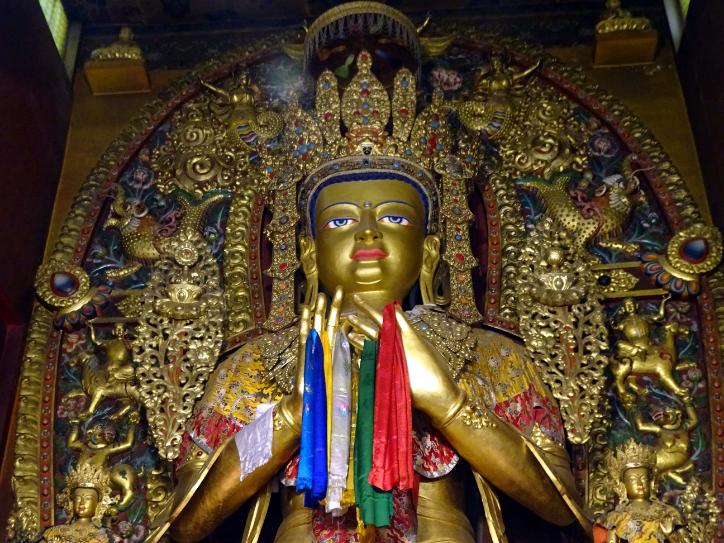
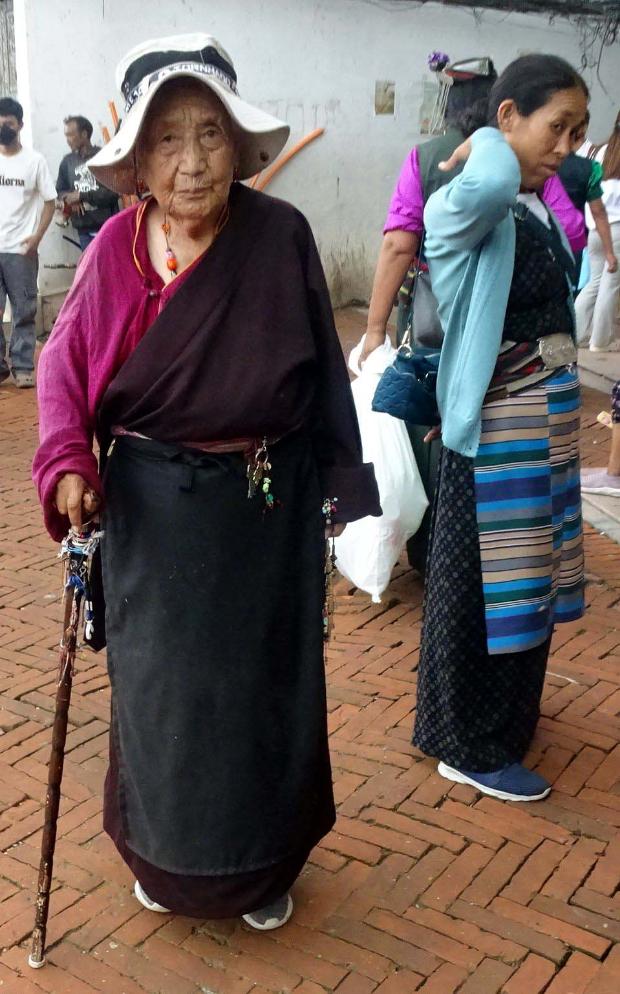
We went to the stupa three times on this visit, the third being on a full moon. Magical! For some reason I am drawn to Tibetan Buddhism. I don’t go looking — it comes to me. Experiences such as in Hawaii with the twinkling Dalai Lama, with his monks blessing my home during the Joyful Wisdom Tour, with monks “cold-calling” me in Tibet to be initiated, with “my Buddha” at Boudhanath reducing me to sobs in his presence. Although I haven’t formally studied the religion, somehow our paths keep crossing and insights are provided along my spiritual path. I have been told by Tibetans — always complete strangers while traveling — that I am the reincarnation of a Tibetan monk, or that I know the dharma and should be initiated by the Panchen Lama. This trip was no exception. A brightly colored Tibetan pilgrim walked up to me, stared deep into my eyes, and told me, “You have a happy mind,” before disappearing back into sea of pilgrims.
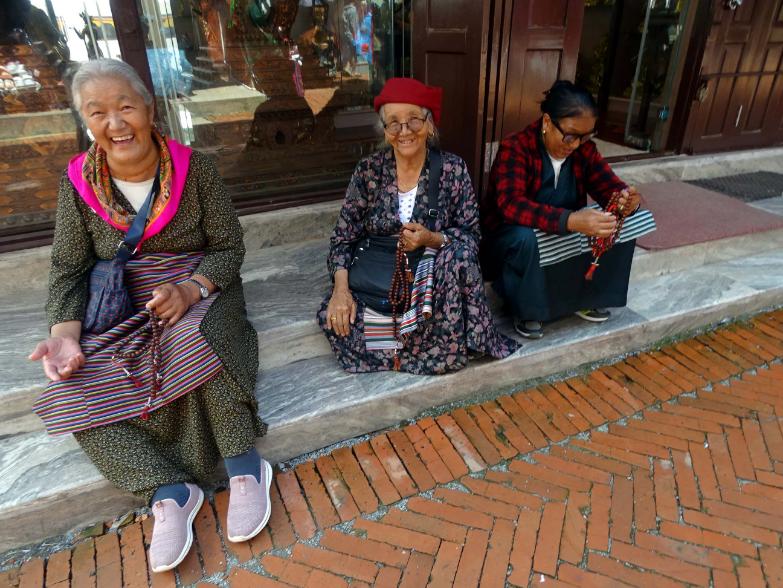
Boudhanath Stupa is one of those special places on earth — a high-energy point. One of the largest and most significant Buddhist monuments in the world, it serves as the spiritual heart of Tibetan Buddhism in Nepal. It is inspiring to join the sea of Tibetan pilgrims circumambulating the stupa — some prostrating, some walking with prayer beads, some spinning the thousands of prayer wheels that line the path. One afternoon was so hot and noisy that I drifted over to a new addition among the small cafés, singing bowl shops, Buddhist relic and thangka shops, and gompas lining the path. Standing out like a beacon was, of all things, a freshly painted Japanese ice cream shop. I said to myself, “If they have vegan ice cream, I will buy one!” They not only had vegan, but chocolate — my favorite. Licking my newly acquired prize, I literally swam upstream through the “seething” stream of a thousand pilgrims to a small set of steps leading up to the upper level of the stupa. Immediately I was met with a gentle, cool breeze. With only 20 or so other people on that level, I walked slowly, calmly — cool and refreshed — around the upper circuit. Enjoying the rare luxury of a refreshing ice cream cone, another message came to me: “Trust in life. Enjoy the journey. You can make it difficult like the hot, prostrating pilgrims below, or you can live in gratitude and learn through joy!” Thank you. Message received.
Love, Light & Laughter,
xo Nancy & Joseph
TRAVEL NOTES:
“Namaste” — Nepalese greeting ‘The light within me bows to the light within you’.
Hotels: Anywhere
Go to Agoda.com or Booking.com or Google.com compare prices and special deals. We usually can find an offer for 75% off discount and away we go! Booking ahead has advantages like lower prices and availability but it also limits your spontaneity. I remember in Asam, finding a quiet little room with a good view in the Carolina Mountains. We woke up and decided to enjoy the view another couple days. That day, the train we were supposed to catch was attacked by insurgents with machine guns. Eight people killed. And we didn’t even know there was a conflict. Spontaneity really pays off sometimes!
The Nirvana Boutique Hotel:
A popular accommodation in Thamel, Kathmandu, Nepal, known for its tranquil atmosphere, rooftop garden, and locally themed decor. The hotel consistently receives high ratings (9.2/10) for its cleanliness, convenient location near tourist attractions, and friendly service, including free airport pick-up
Stay in the travelers area of Thamel. It is interesting to walk the streets lined with shops and cafes.
Annakoot Veggie: in Thamel. A quiet café with good food. Near Nirvan Hotel
Boudanath Stupa: Not to be missed. Taxi about 20 minutes from Thamil district.
Utpala Café: Address: P9F6+HVF, Utpala way, Kathmandu 44600, Nepal – behind Boudanath Stupa, Training center and Café, sponsored by a nearby Monastery.Phone: +977 981-0700763 Pure Veg / Vegan-Friendly Restaurant | Peaceful & Open Space | No Alcohol & No Smoking, a serene and welcoming vegetarian & vegan- friendly haven where wholesome dining meets tranquility. Enjoy delicious, guilt-free meals in our peaceful, open space—perfect for mindful eating and relaxation. Dining Options: A La Carte Menu:Available Sunday 7 AM to 8:30 PM everyday Friday Unlimited Buffet Dinner: ₹450 | 5:30 PM – 8:30 PM Saturday Unlimited Buffet Breakfast & Lunch: 7 AM – 3:30 PM (Break: 11:30 AM – 12:30 PM) We pride ourselves on serving fresh, flavorful vegetarian and vegan dishes in a smoke-free, alcohol-free environment. Whether you’re here for a hearty buffet or a curated meal from our menu, we promise a delightful culinary haven.”
Garden of Dreams: A small garden where you can hide away from the busy streets.
Durbar Square: Take a taxi to all the major sites around the city or organize a day tour to see the highlights of Kathmandu
White Gumba: Seto Gumba (White Monastery), or Druk Amitabh Mountain, is a renowned Buddhist monastery in Nagarjun Municipality, Kathmandu, offering stunning valley views, intricate Tibetan architecture, and a peaceful atmosphere. Often open to the public on Sundays, it is a popular spot for photography, meditation, and short hikes, featuring gardens, murals, and statues
Kopan Monastery: is a Tibetan Buddhist monastery near Boudhanath, on the outskirts of Kathmandu, Nepal. It is a member of the Foundation for the Preservation of the Mahayana Tradition, an international network of Gelugpa dharma centers, and once served as its headquarters.